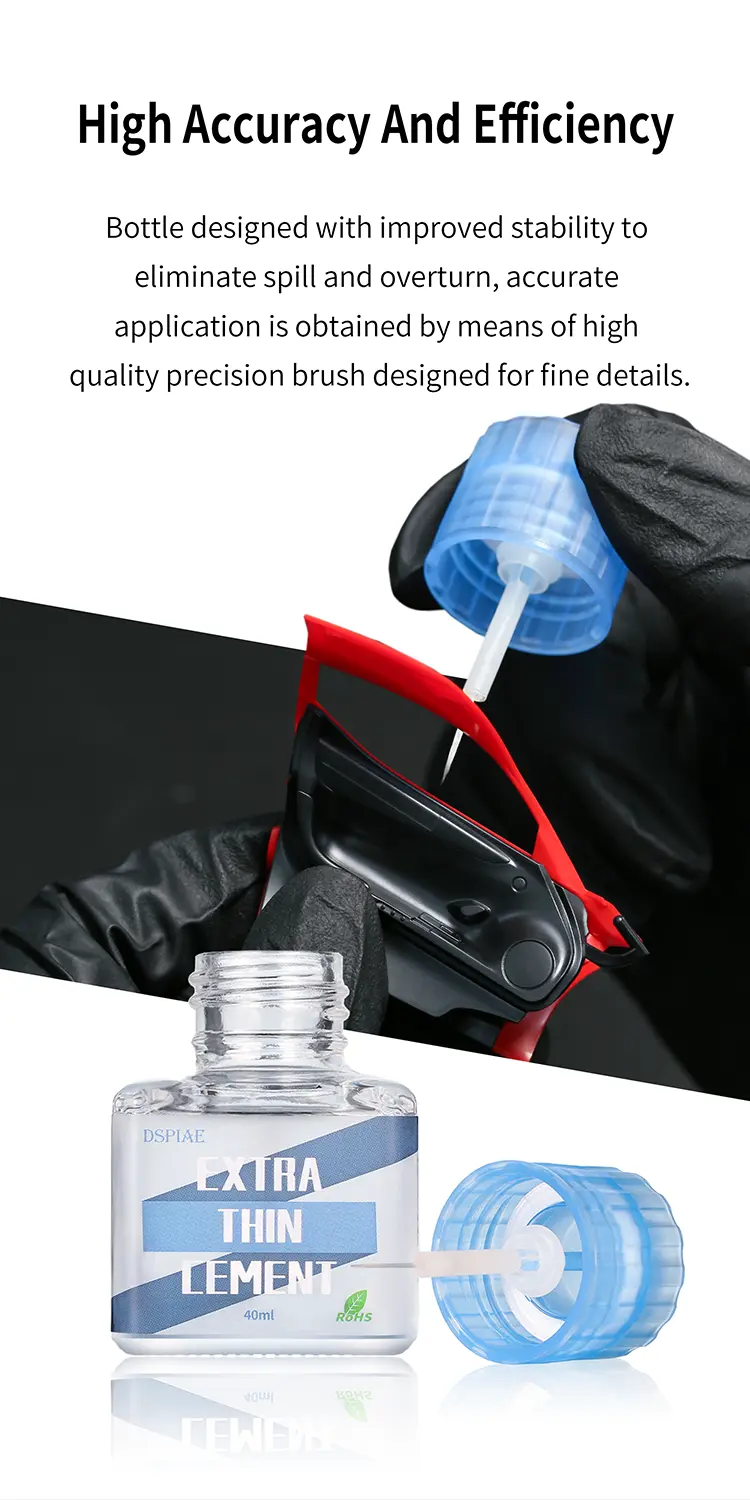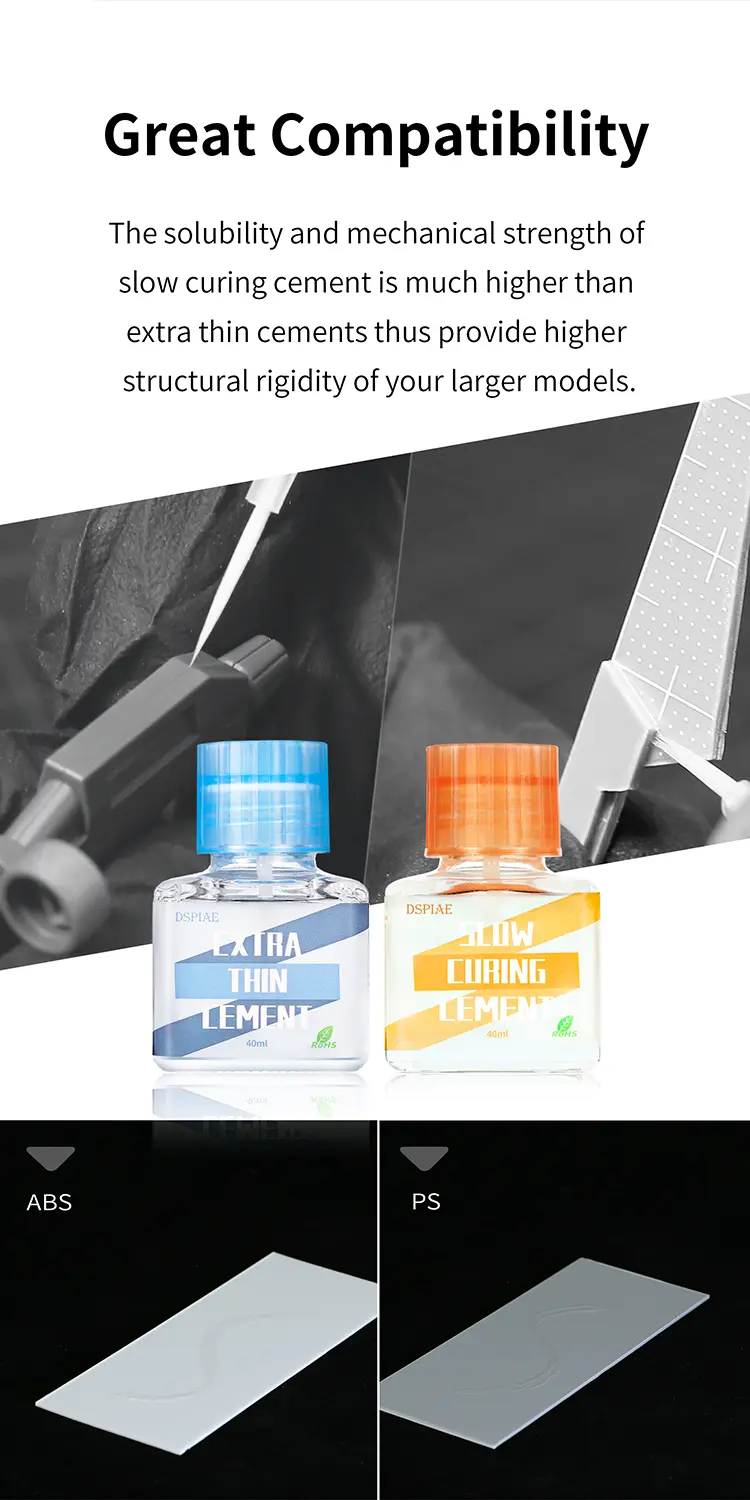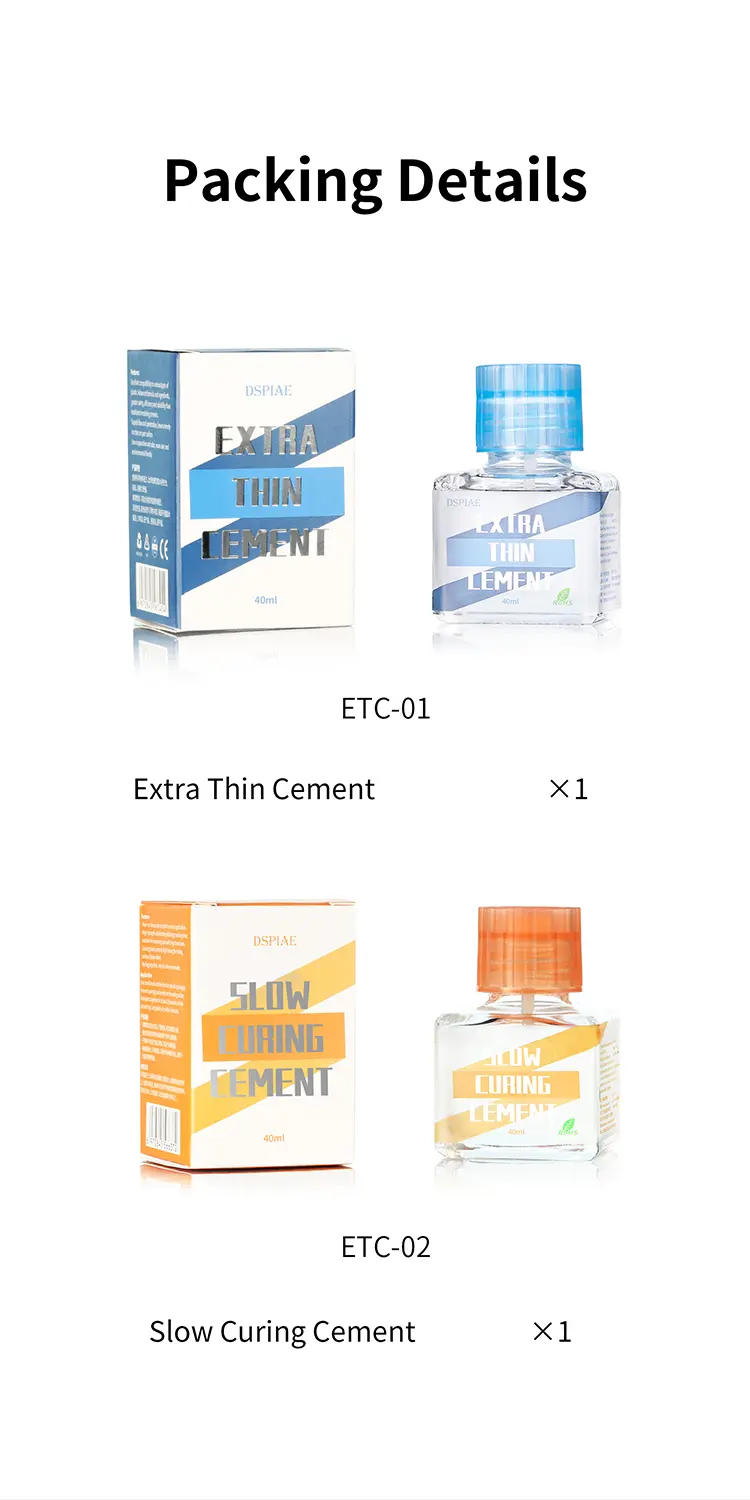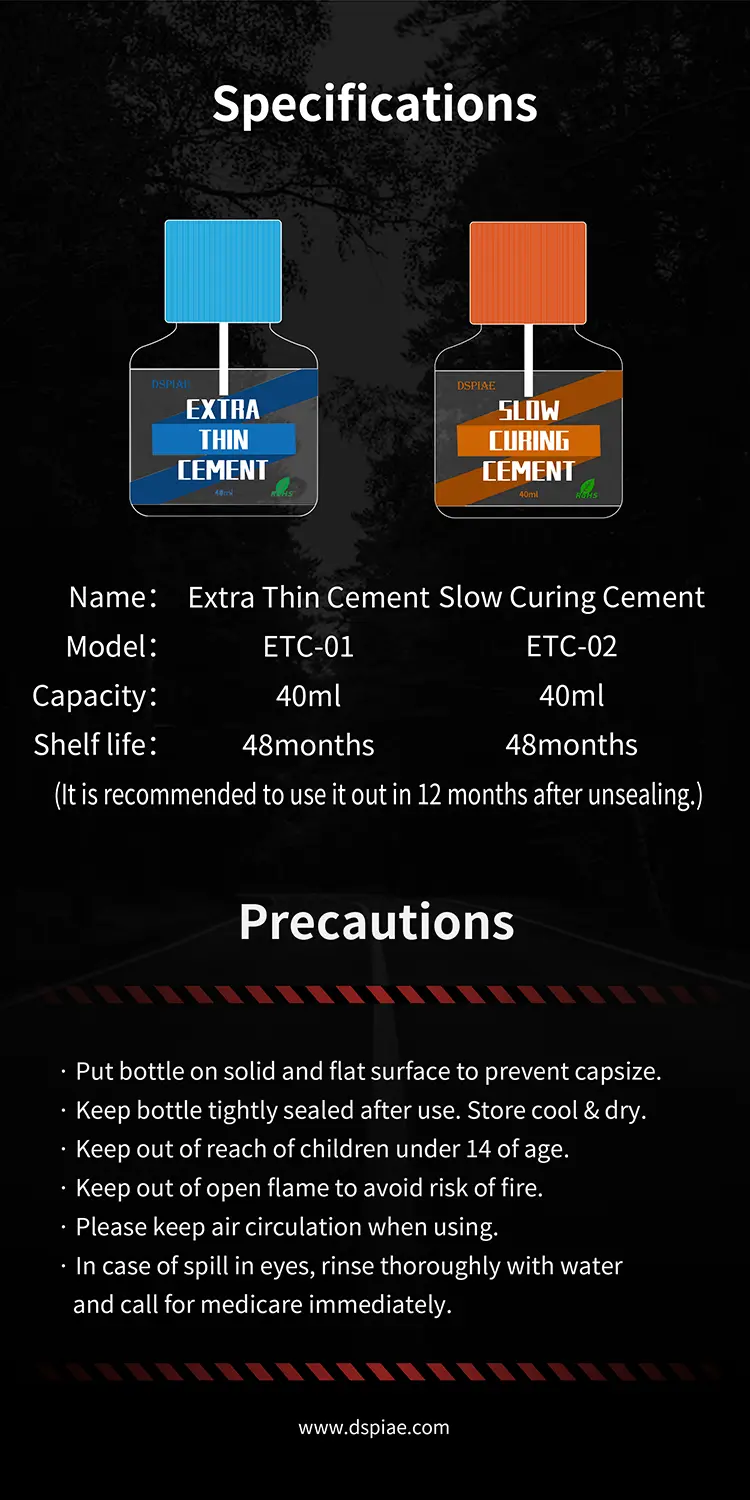


DSPIAE ETC-01 Extra Thin Cement and DSPIAE ETC-02 Slow Curing Cement are solvent-type plastic cements made for styrene model kits. Instead of “gluing” like CA, they soften and weld the plastic surfaces together, helping you achieve strong bonds and cleaner seams when used correctly.
Choose your type
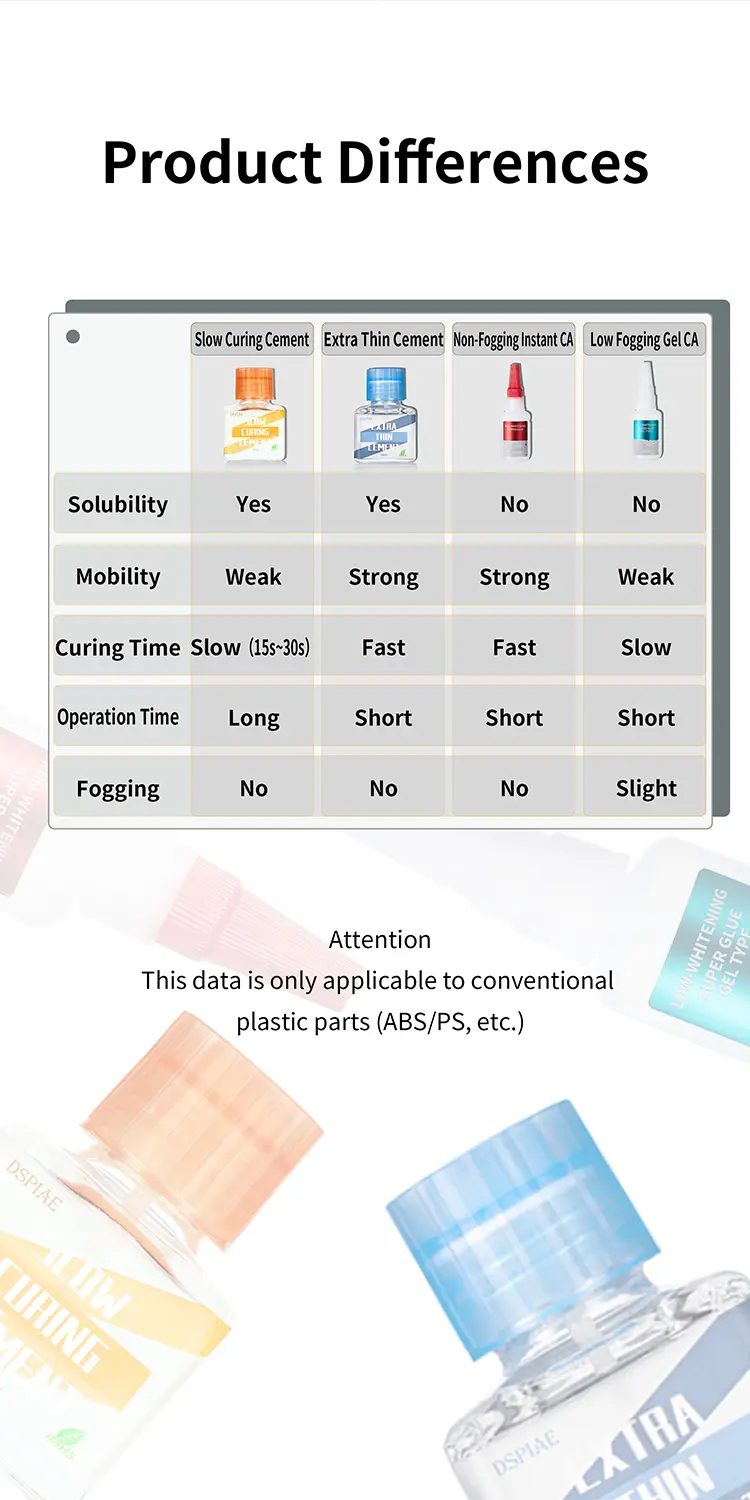
- ETC-01 Extra Thin (Quick Drying): low-viscosity, fast-setting cement that wicks into tight joints by capillary action—best for pre-fitted parts and seam work.
- ETC-02 Slow Curing: a slower-setting, more controllable cement (often listed as a “jelly” / low-flow solvent cement) for large surfaces and situations where you want more working time and placement control.
Key features
- Solvent weld bonding: melts and fuses styrene parts for a strong joint.
- Brush-in-cap applicator for accurate placement along seams and edges.
- Clean seam finishing: when applied sparingly, excess squeeze-out can be sanded to help reduce visible seams.
ETC-01 Extra Thin (Quick Drying) – best uses
- Wicking into pre-fitted joints and tight seams
- Fast assembly of small parts where you want a quick “grab”
- Seam welding along panel lines / edges with controlled brush application
ETC-02 Slow Curing – best uses
- Large surface bonding (e.g., broad mating faces)
- Point-to-point bonding of small parts when you need extra time to position
- Jobs where you want the cement to stay put with less run and more control
How to use
- Dry-fit first to ensure alignment.
- ETC-01: hold parts together, then touch the brush to the seam and let it wick in; avoid flooding.
- ETC-02: apply a thin layer to one or both faces, then join and adjust while it’s still workable.
- For cleaner seams, apply lightly, press parts together, and let a small bead of softened plastic form; allow to fully cure before sanding.
Specifications
- Capacity: 40ml (each)
- Type: solvent-based plastic cement (styrene-focused)
What’s included
- 1 × DSPIAE Plastic Cement (ETC-01 or ETC-02, 40ml)
- Brush applicator integrated in the cap
Notes & safety
- Recommended for styrene (PS) plastics; test first if you’re working with other plastics.
- Avoid use on soft elastomer parts (it may cause brittleness); test on spare material if unsure.
- Use in a well-ventilated area and keep away from heat/flames (solvent product).
- For best performance, keep the cap closed when not in use; for slow-curing cement, it’s commonly recommended to use promptly after opening.